platform
Why database teams are consolidating into one operations console
Monitoring, waits, backup and management rarely fail in isolation — but tooling often does. Here’s why consolidation matters.
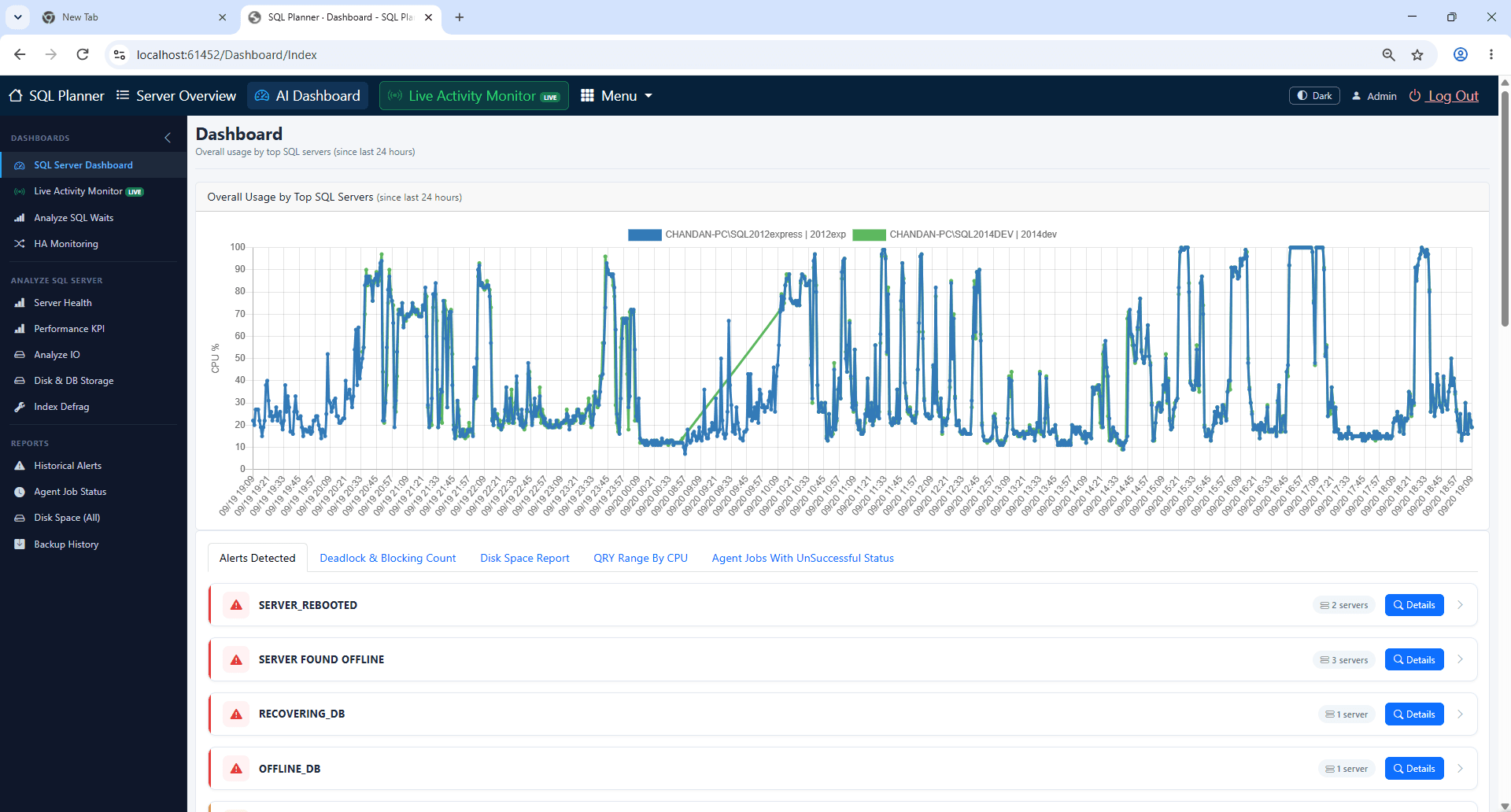
Most database incidents are not a single-tool problem. A slow app may start as a wait-time spike, show up as disk pressure on Windows, then surface again as a missed backup window or a blocked session. When those signals live in different products, engineers spend the first half of an outage stitching context together.
Consolidation into one operations console is not about fewer logos on a slide. It is about keeping monitoring, wait analysis, host signals, backup status and day-to-day SQL work in the same workflow — so the next click is investigation, not another login.
SQL Planner is built around that idea: a browser-based platform where SQL Server and Windows Server health sit beside query context, alerting and management tools. Teams that consolidate report fewer “which tool was right?” debates and faster handoffs between DBAs, infrastructure and application owners.
If your estate still spreads critical signals across disconnected consoles, start by mapping one recent incident end to end. Wherever you had to switch products mid-investigation is where consolidation pays for itself.
Prefer a walkthrough? Watch the latest product videos or book a demo.